Ask most surfers when to visit Lombok and they'll tell you May to October without hesitation. They're not wrong — but they're not giving you the full picture either. Understanding Lombok's seasons properly, not just the headline answer, is one of the most underrated pieces of planning you can do before a surf trip here.
Here's what most guides don't tell you. Yes, the dry season from May to October brings consistent, medium to large southwest swells and the breaks are pumping. But those beloved offshore winds that groom the waves into perfect, clean faces? They're only truly reliable at a handful of breaks — Mawi, Desert Point, Inside Ekas and Outside Ekas. The remaining fifteen-odd breaks around the south coast are dealing with some degree of wind and chop for much of the day during these months. That doesn't make them unsurfable — far from it — but it changes the experience significantly and, importantly, it changes which board you want under your feet.
The wet season from November to April, meanwhile, gets written off by most visiting surfers as a second-best option. In reality it's arguably the best-kept secret in Indonesian surfing — light winds, glassy conditions almost every morning, surprisingly consistent swell, and the full range of Lombok's breaks firing at once. In some respects, it's the real on-season. Just bring a rain jacket.
This guide breaks it all down — dry season conditions and which breaks genuinely fire, the wet season opportunity most surfers are sleeping on, a month-by-month breakdown of what to expect, and how to choose the right board for whichever season you're planning around. By the end you'll have a clearer picture of Lombok's surf calendar than most people who've been coming here for years.
The Dry Season (May–October) — Which Breaks Fire and When
May through October is when Lombok announces itself to the surfing world. Consistent southwest swells roll in from the Indian Ocean, the breaks are pumping, and the south coast comes alive with surfers chasing some of the best waves in Indonesia. But if you're planning your trip around the dry season, knowing which breaks actually benefit from these conditions — and which ones you'll be fighting the wind at — will make the difference between a great trip and a great trip.
The honest truth about dry season winds is this: the southeast trade winds that define this period are offshore for only a handful of breaks on the south coast. Mawi, Desert Point, Inside Ekas and Outside Ekas are the four that genuinely light up in these conditions — the wind is behind you, the faces are groomed, and when the swell is on, these waves are as good as anything in Indonesia. The other fifteen-plus breaks around the south coast are dealing with some degree of onshore or cross-shore wind for much of the day. Early mornings are the exception — the wind is often light enough in the first hour or two after sunrise that almost any break is a good option. But plan for wind if you're paddling out after 9am and you won't be disappointed.
Here's how the four offshore breaks break down in dry season conditions:
Mawi
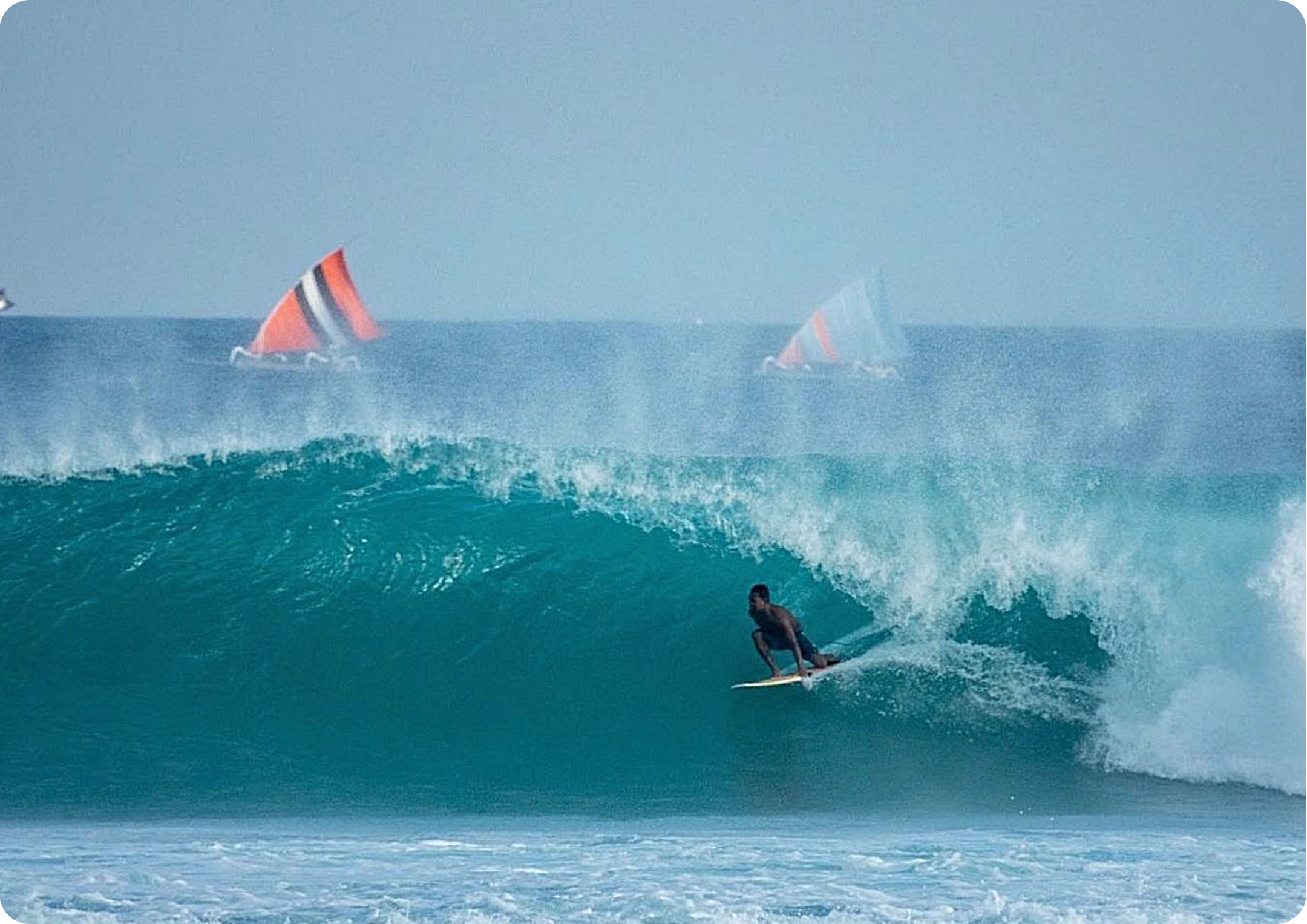
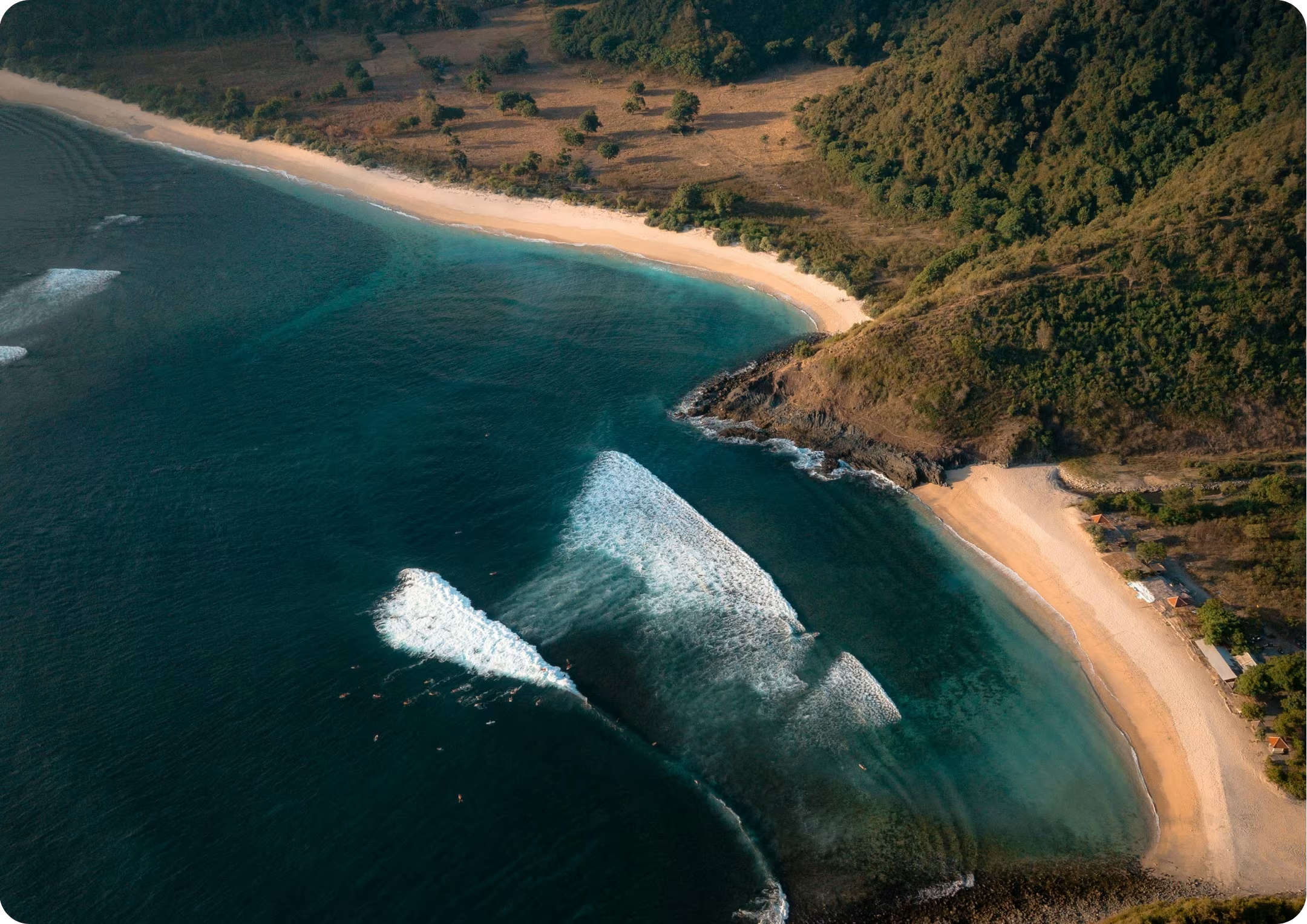
Mawi is the centrepiece of Lombok's dry season and one of the most interesting waves on the island to read. It runs differently depending on swell size and tide, and getting that combination right is what separates a good Mawi session from a great one.
On smaller swells, Mawi works best with a little water on it — a pushing or mid tide gives the wave enough shape to run properly without getting too fast and closing out. The same principle applies as the swell builds, though a bigger wave is more manageable across a wider range of tides. In both cases, the reef produces a more distinct left and right on the outer edges — two separate, well-defined peaks that reward surfers who are willing to position themselves and wait.
With more water — a higher tide on any size swell — the long lefts from the top of the reef begin to connect through, and a more pronounced A-frame develops in the middle of the break. This is when Mawi shows its full potential and when the wave count for committed surfers goes through the roof.
As the swell gets bigger, the dynamic shifts. Taking off on the right becomes increasingly risky — at solid size the right is a short, consequence-heavy drop onto a shallow section — and the left begins to dominate the break entirely. This is when Mawi becomes a left-hander's dream and everyone else's exercise in patience and judgment. If you're not comfortable on the left at size, sit wide and wait for a lull — you'll end up at the bottom of the rip eventually either way, just hopefully not wearing a set on the head. A helmet is not a bad idea at Mawi on a big day, and nobody will look twice if you're wearing one.
Ekas Inside
Ekas Inside is the more forgiving of the two Ekas breaks but don't let that fool you — it still gets serious when the swell is on. At low tide the wave steepens up considerably, throwing more defined lips and giving performance surfers something to work with. Push the tide higher and it fattens out into a longer, more forgiving wall — ideal for a mid-length or longboard session and genuinely one of the most enjoyable easy waves on the south coast. Either way it's a fun, accessible wave for a wide range of surfers. That said, when a solid swell hits Ekas Inside it earns its helmet advisory just like the rest of them.
Ekas Outside
A completely different animal to Ekas Inside and one that demands respect. Ekas Outside is a mid to high tide wave — it needs water on it to work properly and at low tide it can be uncomfortably shallow in sections. When the tide and swell align it's one of the most powerful and barrel-heavy waves in Lombok, shifting across the reef with strong currents that make reading the lineup a challenge even for experienced surfers. Barrels are there for the taking if you know where to sit and can handle the current — but this is not a wave to underestimate. Commit to your positioning, know where the channel is, and respect the tide movement.
Desert Point
Desert Point is the one that surfers dream about on the flight to Lombok and it earns every bit of that reputation — when it's on. Low tide with some genuine size is when Desert Point becomes the wave of someone's life — a long, grinding left that starts with a relatively straightforward takeoff and then grows and grows as it runs across an increasingly shallow reef. The barrel section at the end is world-class and genuinely shallow. A helmet here is not just sensible, it's something a lot of experienced surfers reach for without a second thought. People get smoked at Desert Point chasing the wave of their lives — it's part of the deal.
The wave is reportedly surfable across most sizes and tides but the magic combination is size plus low tide. Without both, you're still surfing a good wave — just not the legendary one. Desert Point is also one of the busier breaks on the south coast precisely because word travels fast when it's firing. Scoring it with a thinner crowd is most likely on the shoulder months of the season — May and October — when the wind is still light enough to groom it but the peak crowds haven't arrived or have already left.
A note on board selection for dry season
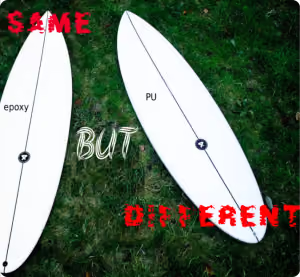
The dry season is when your board choice really matters. The four offshore breaks listed above reward performance equipment — step-ups for bigger days, a well-shaped daily driver for the in-between swells, and fin setups that prioritise hold and drive over looseness. The windier conditions at other breaks also worth considering — an epoxy board, while durable and great for many situations, can feel skatey and unpredictable in choppy, onshore surf. A PU board with a little more weight tends to hold its line better through chop. It's one of those nuances worth talking through before you buy. Come into Flow and we'll point you in the right direction based on the breaks you're planning to surf and the conditions you're most likely to encounter.
The Wet Season (November–April) — Lombok's Best Kept Secret
Here's what most surf trip guides get wrong about Lombok's wet season: they treat it as the off-season. It isn't. In many respects, November through April is the most underrated window to surf this island — and for the right surfer, it might actually be the better time to come.
The prevailing narrative is simple: dry season good, wet season bad. Consistent swell versus inconsistent swell. Offshore winds versus onshore winds. What that narrative misses is that the wet season swell in Lombok is surprisingly consistent — far more so than most people expect. You might encounter a few days of flat or minimal surf each month, and we're talking a handful at most, but for the vast majority of the wet season the swell is up, it's real, and on the bigger days it's pushing double overhead at the better spots. This is not a season of small, gutless waves. It's a season of genuine surf with a different character.
The game-changer is the wind. From November through April the trade winds ease off, the southeast dominance breaks down, and conditions shift to light and variable — often glassy, particularly in the mornings. And unlike the dry season where glassy conditions are a brief early-morning window before the trades kick in, the wet season glass can hold well into the day. Some days are glassy from dawn to dusk.
What this means in practice is that every break on the south coast becomes a viable option. The fifteen-plus breaks that spend the dry season dealing with onshore chop suddenly light up with clean faces and proper shape. Spots that most dry-season visitors never even consider — the more sheltered bays, the sandier, more forgiving breaks, the intermediate-friendly peaks that get blown out by midday in July — become genuinely excellent waves. The variety of what's on offer in the wet season is significantly broader than anything the dry season can offer, simply because the wind is no longer filtering your options down to four breaks.
There is a trade-off and it's worth being honest about it. Mawi and Desert Point — the two headline acts of Lombok's dry season — largely go quiet in the wet season. Without the offshore wind to groom them the character of both waves changes, and the swell direction shift means they're less consistent and less defined. If Mawi and Desert Point are the specific reason you're coming to Lombok, the dry season is your window. But if you're coming to surf Lombok — the full range of what this island offers — the wet season makes a strong case for itself.
For intermediate and beginner surfers in particular, the wet season is arguably the superior choice. The more forgiving, still long-period breaks, that reward developing technique shine brightest when the wind drops out and the faces are clean. A surfer who's spent a week in Lombok during the wet season, working their way through the variety of well-shaped, accessible breaks available, will have progressed more than the same surfer grinding through choppy conditions at the handful of dry season options.
Board selection shifts accordingly. The high-performance step-up that was earning its keep at Desert Point in July becomes less relevant in November. What comes into its own is the groveler for the fun, smaller days, and the all-round daily driver that can handle a range of conditions without demanding perfection from the surfer or the wave. A well-chosen mid-length covers an enormous amount of wet season Lombok surf beautifully. And on those double overhead days when the swell pulses — because they will come — you want something with enough volume and rocker to handle the size without getting away from you. We can help you build that quiver, or find the one board that covers the most ground for your specific plans.
One more thing worth mentioning: the wet season is also when Lombok is at its most visually spectacular. The hills are green, the light is different, and yes, it rains — sometimes heavily, sometimes for days at a stretch. Pack accordingly, embrace it, and remember that a warm tropical downpour between sessions is a completely acceptable trade-off for empty lineups and glassy waves. Don't overlook this season. In fact, for a lot of surfers, we'd quietly suggest you plan for it.
Month by Month — What to Actually Expect in the Water
Planning a surf trip around a season is one thing. Knowing what a specific month actually looks like in the water is another. Here's the honest breakdown — swell, wind, crowds and conditions — for every month of the Lombok surf calendar.
May — Dry Season Begins
May is one of the most underrated months in the Lombok surf calendar. The southwest swell is building, the breaks are starting to fire, and the crowds that peak in July and August haven't arrived yet. Wind is transitioning from the lighter wet season pattern to the southeast trades but is still relatively manageable across a wider range of breaks than the peak dry season months. Desert Point is worth checking — the shoulder of the season is when you're most likely to score it with a thinner crowd. Long period swells are already rolling through consistently and the water is warm. Come in May if you want quality surf without the peak season noise.
June — Dry Season Hits Its Stride
June marks the proper arrival of dry season conditions. Southwest swells are consistent and building toward their peak, the southeast trades are established, and the four offshore breaks — Mawi, Desert Point, Ekas Inside and Ekas Outside — are in their element. Early mornings across the south coast are often light and glassy before the wind fills in. This is a great month for experienced surfers who know which breaks to target and when. Crowds are present but haven't reached their July and August peak. Long period swell energy is strong and reliable.
July — Peak Season
July is peak Lombok. The swell is consistent, the offshore breaks are firing, and the island is at its busiest. Mawi on a solid southwest swell with a pushing tide in July is as good as it gets in Indonesian surfing. Desert Point will be busy when it's on — it's always busy when it's on in July — but the wave is worth the crowd if the conditions align. Expect competition in the water at the most popular breaks and plan your sessions accordingly. Early mornings and patience are your best tools this month. Performance equipment is the call — step-ups for the bigger days, a well-shaped daily driver for everything else.
August — Peak Season Continues
Much the same as July with consistently large, long period southwest swells and strong southeast trades. August is when the south coast sees its highest visitor numbers and the better-known breaks reflect that. The flip side is that the swell is reliably on — you're not coming in August hoping for waves, you're coming knowing they'll be there. If crowds bother you, use August to explore the less-frequented breaks on the shoulder of the south coast. There are waves here that see a fraction of the traffic of Mawi and Gerupuk even at peak season.
September — Shoulder Season Gold
September is quietly one of the best months to surf Lombok and one of the least talked about. The southwest swell is still consistent and pumping, the long period energy hasn't dropped off, but the peak season crowds have begun to thin as school holidays end in key visitor markets. Wind is still predominantly southeast and offshore at the main breaks but is often a touch lighter than July and August. Desert Point is worth prioritising this month — the combination of quality swell and thinner crowds makes September one of the best windows to score it properly. Highly recommended.
October — Transition Month
October sits at the hinge between seasons and rewards surfers who understand what that means. The southwest swell is easing but still delivering quality waves, the trade winds are beginning to break down, and conditions across the wider range of breaks start to improve as the wind becomes more variable. Some days feel like pure dry season, others hint at what's coming in November. Crowds are low. Long period swells are still arriving consistently. This is another shoulder month that punches well above its reputation — experienced surfers who time it right often consider October one of their best Lombok trips.
November — The Shift
November is the beginning of the wet season transition and the month where Lombok quietly becomes a different and in many ways more interesting surf destination. The southeast trades ease off, wind turns light and variable, and the glassy conditions that define the wet season start appearing with increasing regularity. The swell direction shifts and Mawi and Desert Point begin to lose their consistency. In their place the broader range of south coast breaks open up — cleaner faces, more variety, fewer crowds. Long period swells continue to deliver size on the better days. Rain arrives, sometimes heavily. Embrace it.
December — Wet Season Proper
December is full wet season — light winds, regular glassy conditions, consistent swell and a lineup of breaks that sees a fraction of the July crowd. The long period swell that runs year-round in Lombok keeps delivering size when the Indian Ocean fires up, and the clean conditions make those bigger days particularly enjoyable. This is a genuinely excellent month to surf Lombok if you're willing to trade the headline breaks for a broader, more varied menu of waves. Board choice shifts toward all-rounders and grovelers for the fun days, with something with a bit more volume and rocker available for when the swell jumps.
January & February — Glassy Season Peak
If glassy, uncrowded surf is your priority, January and February make a compelling case for themselves. Wind is at its lightest and most variable, glassy mornings are the rule rather than the exception, and the south coast breaks that spend the dry season dealing with chop are at their best. Swell is consistent — long period energy is year-round in Lombok — and while the average size is a touch lower than the dry season peak, it's far from flat. Double overhead days happen. Crowds are as low as they get all year. For intermediate surfers especially, this two-month window offers some of the best conditions for progression available anywhere in Indonesia.
March & April — Wet Season Fades
March and April mark the gradual transition back toward dry season conditions. Wind begins to settle back into a more consistent pattern, the swell starts to reorganise toward the southwest, and the first hints of the offshore conditions that define May through October begin to appear. Mawi starts to wake up again toward the end of April. The crowds that come with dry season haven't arrived yet. These are two genuinely rewarding months to be in Lombok — the tail end of the glassy wet season overlapping with the early signs of the swell season building. Long period swells are consistent throughout and the variety of surf on offer remains broad.
The constants worth knowing
Across every month of the Lombok surf calendar, a few things hold true. Swell is consistent year-round — Lombok sits in one of the most reliably energetic stretches of ocean on earth and long period swell energy is always arriving from somewhere. A few flat days each month during the wet season is the most you'll encounter, and even then the south coast usually has something rideable somewhere. Crowds are manageable if you're willing to go a little bigger and a little deeper — once the surf pushes past overhead and a half the lineups thin out considerably at most breaks. Desert Point is the exception to that rule; when it's firing at size, everyone on the island wants the same wave. And regardless of month, early morning is almost always your best session of the day.
Which Board for Which Season — Let Flow Sort You Out
Understanding the season is half the equation. The other half is making sure the board under your feet matches the conditions you're actually going to encounter. This is where a lot of surfers get it wrong — they buy or bring a board calibrated for the season they imagined rather than the one they're actually in. Here's how to think about it.
The ideal quiver for Lombok — if budget allows
The honest answer is that three boards covers Lombok's full range across both seasons beautifully. A groveler for the smaller, punchier days, a daily driver for the mid-range conditions that make up the majority of your sessions, and a step-up for when the swell jumps and the better breaks start showing their teeth. With those three boards you're covered from knee-high fun waves at Selong Belanak in the wet season to solid overhead-plus Mawi in the dry season peak. If you're staying in Lombok for an extended period or returning regularly, building toward that three-board quiver is one of the best investments you can make in your surfing here.
The dry season board
Dry season Lombok rewards performance equipment. The four breaks that genuinely fire in offshore conditions — Mawi, Desert Point, Ekas Inside and Ekas Outside — are powerful, fast and in some cases consequence-heavy waves that respond best to boards with hold, drive and the ability to handle steep takeoffs. For most surfers targeting these breaks, a well-shaped daily driver in the hybrid or shortboard category is the foundation, with a step-up available for the bigger swells.
Board construction matters more in the dry season than most people factor in. Choppy, onshore conditions at the breaks outside the offshore four mean you'll be dealing with textured, unpredictable surf for much of the day if you venture beyond the main breaks. An epoxy board — lighter, bouncier, more affected by surface chop — can feel skatey and difficult to control in these conditions. A PU board carries its weight through the chop more predictably and tends to hold its line better when the surface is messy. If you're primarily targeting the offshore breaks it's less of an issue, but if you're surfing the full range of what's available in the dry season, construction is a conversation worth having before you buy.
The wet season board
The wet season opens up Lombok's full menu of breaks and calls for a more versatile approach. The high-performance step-up that was earning its keep at Desert Point in August becomes largely redundant in December — what you want now is equipment that works across a wider range of waves and conditions.
A well-chosen all-rounder or hybrid in the daily driver category covers the majority of wet season Lombok surf beautifully — enough volume to paddle into the longer, cleaner faces that glassy conditions produce, enough performance shape to get the most out of the better waves when the swell is up. A groveler earns its place in the wet season quiver too — the fun, punchy smaller days that the lighter wind produces are exactly what a groveler was designed for, and there will be plenty of those days between November and April.
For surfers who want one board that covers the most ground in the wet season, a mid-length in the 7'0 to 7'8 range is genuinely worth considering. Clean faces, variety of breaks, waves that tend toward longer and more open — the wet season plays to the mid-length's strengths better than almost any other conditions in Indonesia. Don't underestimate it.
On the bigger wet season days — and they will come, double overhead is very much on the table when a strong long period swell arrives — you want something with enough rocker and volume to handle the size without getting away from you. This doesn't have to be a dedicated step-up. A slightly fuller daily driver in the right length handles big wet season surf competently for most surfers and gives you far more range on the smaller days in return.
The one-board quiver question — answered by season
If you're traveling with one board and want to make the best call for the season you're visiting in, here's the short version.
Dry season one-board: a performance hybrid in the 5'10 to 6'4 range with enough volume to paddle the offshore breaks comfortably and enough shape to handle steep, fast walls. PU construction preferred for the choppy conditions at other breaks.
Wet season one-board: a versatile all-rounder or mid-length with a touch more volume than you might ride at home — the variety of breaks and clean conditions reward a board that works across a wide range than one that's dialed in for a specific wave type.
What Flow carries and how we can help
At Flow Surf in Kuta Lombok we carry over 200 boards across the full range — grovelers, daily drivers, step-ups, mid-lengths and longboards — from five of the world's most respected shaping brands: Pyzel, Lost, Sharp Eye, Christenson and Channel Islands. Whether you're building a full seasonal quiver or choosing one board that covers the most ground for your specific trip, we have the range and the local knowledge to get it right.
Beyond boards we carry everything you need for either season — fins across all setups and budgets, leashes, board bags and socks for daily travel, high-quality wax suited to tropical water temperatures, and a full range of apparel for both on and off the water. And for surfers charging the bigger breaks at either Ekas Outside or Desert Point, we carry helmets — not because you'll definitely need one, but because the one time you do you'll be very glad it's there.
Customs are available across all five of our major brands if nothing off the rack is quite right. Your dims, your construction choice, your fin setup — built specifically for the waves and the season you're planning around. Come in and start that conversation.
Plan Your Trip Around the Seasons — We'll Help You Do the Rest
Lombok's surf is consistent, varied and genuinely world-class across both seasons. The difference between a good trip and a great one often comes down to one thing — being prepared for the conditions you're actually going to find, rather than the ones you assumed you'd find when you booked the flights.
If you're coming in the dry season, know which breaks are going to reward you and which ones you'll be fighting the wind at. Choose equipment that handles both the offshore breaks when they're pumping and the choppier conditions at the wider range of spots. Time your sessions, get in the water early, and don't underestimate the power of the breaks that make this season special — a helmet is a sensible piece of kit at several of them.
If you're coming in the wet season, come with an open mind and slightly adjusted expectations about which breaks will be the stars of the show. What you'll find in return is glassy conditions, uncrowded lineups, a far broader menu of waves than most guides prepare you for, and some of the best intermediate and advanced surfing available anywhere in Indonesia. Just pack a rain jacket alongside your board bag.
And if you're still not sure which season suits you best — your skill level, your target breaks, your budget, how many boards you can travel with — come and talk to us. That conversation is exactly what we're here for.
Flow Surf is undoubtedly the most complete surf store in Lombok and, based on what we've seen across Indonesia, one of the most comprehensive surf retail experiences in the country. There are great shops elsewhere — some in Bali we genuinely collaborate with and respect — but most are brand-focused by nature and consequently limited in range. Flow is different. Over 200 boards across every category, customs available through Pyzel, Lost, Sharp Eye, Christenson and Channel Islands, fins of every description, bags, helmets, leashes, apparel, and the kind of local knowledge that only comes from surfing these breaks every single day.
We're in Kuta, open daily from 8am to 10pm. Walk in anytime and we'll have the conversation. Prefer to get the ball rolling before you arrive? Reach us on WhatsApp at +62 852 5819 9566, drop us an email at flowsurflombok@gmail.com, or find everything at flowsurflombok.com.
Whatever season you're planning for — we'll sort you out.