The Complete Guide to Buying a Surfboard in Lombok
Buying a surfboard is one of the best investments you can make in yourself as a surfer. But buying the right board? That takes a little more thought — and a little personal honesty.
However far into the journey you are, the right board depends on a formula that's unique to you. How long have you been surfing, and how consistently are you planning to surf going forward? When did you last get in the water? How comfortable are you in bigger surf? These questions matter more than most people realise when they walk into a surf shop.
Then come the wave questions. Which break are you heading to? What's the shape of that wave — is it fast and hollow, or slow and crumbly? How far up the peak are you planning to sit? What's the tide doing, and what are the conditions likely to be — pumping swell or small, gutless days?
And then the board itself. Groveler, daily driver, step-up, mid-length, longboard — or the ever-tempting one-board quiver that tries to do it all?
It's quite the formula. But with a little information and the right conversation, making a genuinely informed decision is completely achievable. The goal is simple: more waves, faster progression, and a board that lets you surf your best. This guide will walk you through each piece of that formula — and by the end, you'll know exactly what to look for.

Reading the Conditions
Before you even think about board shape or volume, the first question is simple: what are the conditions actually doing?
Lombok's surf is not one-size-fits-all. On any given day you might have clean, overhead lines peeling through at Mawi, while Tanjung A'an is barely knee-high and crumbly, and Gerupuk's Outside is closing out in messy onshores. The island serves up a wide range of conditions across its breaks — and the board that's perfect for one can be completely wrong for another.
Swell size is the starting point. Small, gutless days call for volume, width and a flatter rocker — something that generates its own speed when the wave isn't giving you much. As the swell builds, the equation shifts. More powerful surf rewards a board that can handle the increased energy without getting washed around — less volume, more rocker, a narrower outline that holds through a steeper, faster wall.
Tide plays a bigger role in Lombok than most people expect, particularly on the reef breaks. Mawi at low tide is a different wave entirely to Mawi at high — shallower, hollower, more consequence. Gerupuk's Inside at a pushing tide becomes slower and more forgiving; the same break at low can throw up some surprisingly punchy little barrels. Getting to know how your target breaks shift with the tide is one of the best pieces of local knowledge you can pick up — and it directly affects which board you'd want under your feet.
Wind is the third variable. Early mornings in Lombok are typically offshore or glassy — ideal conditions where almost any well-chosen board will feel good. By mid-morning the sea breeze often kicks in, chopping up the surface and making boards with more volume and a looser feel work harder for you. If you're only surfing one session a day, timing it right matters as much as board choice.
The honest takeaway: conditions in Lombok can swing from forgiving to demanding within the same day. If you're riding one board, it needs to be chosen for the conditions you'll realistically surf most — not the perfect glass-off session you're hoping for.

Reading the Wave
Conditions tell you what the ocean is doing. The wave tells you what the board needs to do.
Once you're at your break and you've read the swell and the tide, the next layer is understanding the specific wave in front of you — its shape, its speed, and where you're planning to sit in the lineup. These details are what separate a board that feels alive under your feet from one that just feels like you're along for the ride.
The first question is how the wave is breaking. A slow, crumbling wave that peels gently across a sandbar is a completely different canvas to a ledging reef break that pitches hard and fast. Slow, weaker waves need a board that can generate its own momentum — wider nose, flatter rocker, more surface area to plane early and stay in the pocket. Fast, hollow waves need a board that can keep up without getting bucked — a tighter outline, more curve through the rocker, something with hold when the wall steepens beneath you.
The second question is where you're sitting on the peak. This is one surfers rarely think about when buying a board, but it matters. If you're surfing the shoulder — picking off the longer, more forgiving sections — you have more time and a more generous board will work well. If you're pulling into the peak, taking off late, and trying to drive through a fast section before it closes, you need a board that responds immediately. Hesitation in that moment isn't a technique problem — it's often a board problem.
Lombok gives you both ends of this spectrum within a short drive of each other. Tanjung A'an is a long, open canvas — forgiving, fun, works with almost anything. Mawi is the opposite — a fast, punchy wave that exposes a board that's slightly too big, too flat, or too loose within the first two turns. Gerupuk's Outside sits somewhere in between depending on the day, which is part of why it's such a good testing ground.
The shape of the wave also tells you something about fin setup, but that's a conversation on its own — come and find us in store and we'll go down that rabbit hole with you.
The key point is this: buying a board without knowing the wave you're buying it for is like buying shoes without knowing if you're hiking or running. Get specific, and the decision gets a lot easier.

The Board Range — Groveler to Longboard
Now that you've read the conditions and understood the wave, the board decision gets a lot more straightforward. Here's the range — honest, Lombok-specific, no fluff.
The Groveler (5'2 – 5'10) Built for small, weak surf. Wide, thick, with a flat rocker and a lot of volume packed into a short template. A groveler's job is to make bad days fun — and in Lombok, on those small, onshore afternoons when the swell has dropped and the surface is choppy, a well-shaped groveler will have you scoring waves everyone else is sitting out. Not a one-board solution, but an excellent addition to a quiver if you're staying a while.
The Fish (5'4 – 6'2) The fish is one of the most fun boards ever made, and it works surprisingly well across a range of Lombok conditions. Wider than a shortboard, with a flatter rocker and a swallow tail, it planes early, generates speed effortlessly, and has a loose, skatey feel that suits the punchy, shorter walls you'll find at a lot of south Lombok breaks. Solid up to overhead, starts to struggle when the surf gets powerful and hollow. For intermediate surfers who want performance without the fight, a fish is often the answer.
The Hybrid / Daily Driver (5'8 – 6'4) This is where most surfers should be looking. The hybrid takes the best of a shortboard — responsiveness, rail engagement, the ability to handle steeper surf — and softens the entry requirements with more volume, a wider point, and a more forgiving rocker. A well-designed hybrid works from waist-high to a solid overhead, handles Lombok's reef breaks competently, and won't punish you on an off day. If you're buying one board for a trip to Lombok and you're a progressing to intermediate surfer, start here.
The Step-Up (6'0 – 6'8) When the swell jumps — proper overhead-plus surf, fast walls, heavier consequences — you want a board that was built for it. Step-ups are narrower, with more rocker and more hold through steep sections. They're not for everyday surf, but when the conditions call for them there's no substitute. If you're an experienced surfer visiting during peak swell season and you're planning on surfing Mawi or Desert Point at size, a step-up belongs in your board bag.
The Mid-Length (6'6 – 8'2) Possibly the most underrated category in surfing right now. Mid-lengths paddle beautifully, catch waves early, and are far more manoeuvrable than their length suggests — anyone who's watched Mikey February on a 6'10 Channel Islands Mid knows what's possible. They suit a huge range of surfers: beginners building their foundation, experienced surfers who want relaxed, flowing sessions, and anyone in between who's tired of fighting their board. Lower volume and lower rails will push the performance end of the spectrum if that's what you're after.
The Longboard (8'6 and up) The longboard is the great equaliser. It catches everything, rewards good positioning and footwork, and gives you more time on the wave than any other board in the range. For total beginners, that time on wave is invaluable — it's where your surf brain develops, where you start reading the pocket, where foundations are built. For experienced surfers, a well-shaped longboard at a mellow break is one of the purest expressions of surfing there is. Don't sleep on it.
A note on volume Volume ties all of this together and is the single most useful number when choosing a board. As a rough guide: total beginners should aim for around three-quarters of their body weight in kilograms as their volume in litres. As you progress, that number comes down — experienced surfers often ride boards at 0.35 to 0.4 of their body weight. These are starting points, not rules. Swim fitness, wave type, and personal preference all shift the number. The Pukas volume calculator online is one of the best free tools out there — worth five minutes of your time before you walk into a shop.
The One-Board Quiver — Making the Smart Call for Lombok
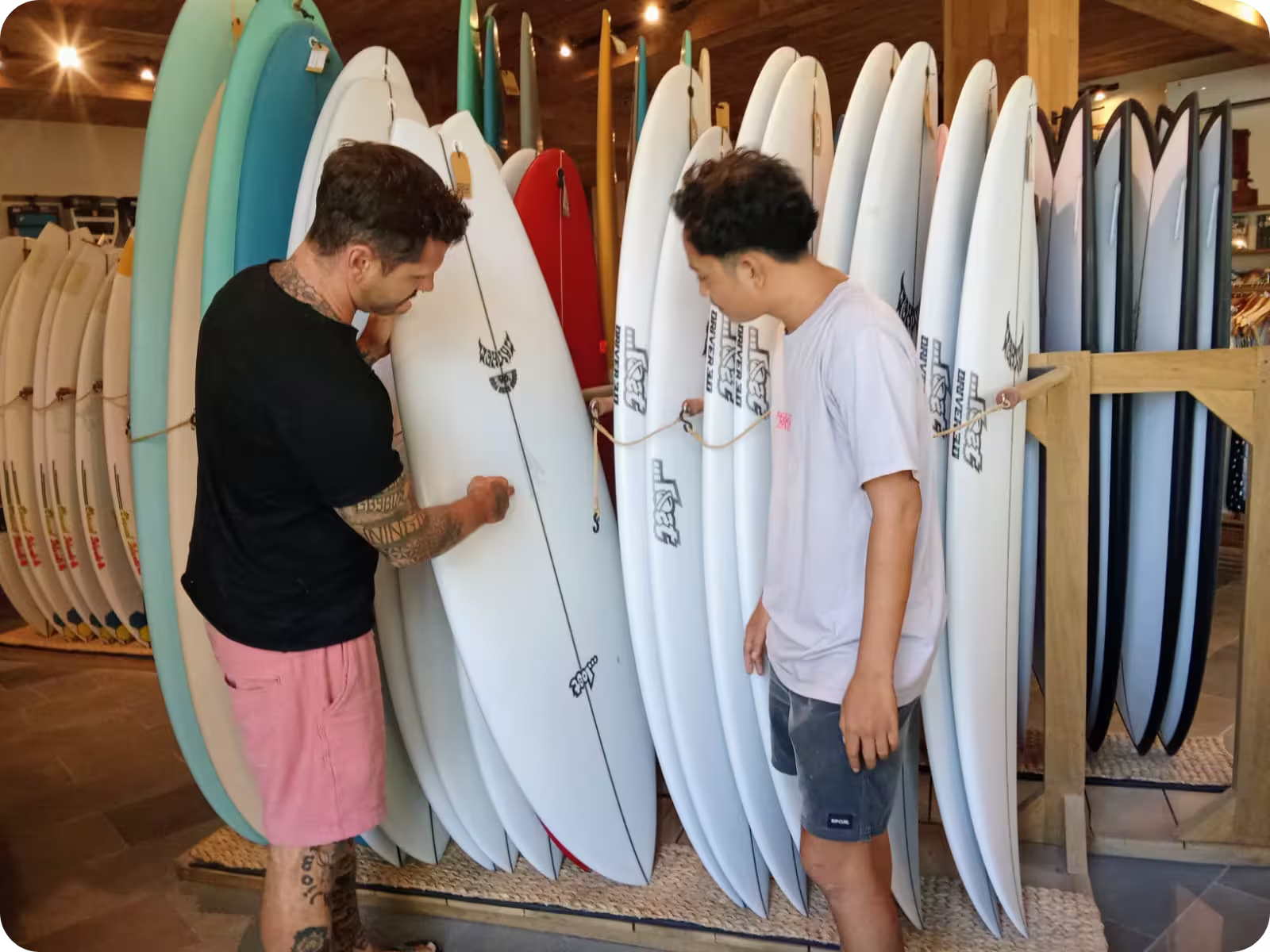
Here's the reality for most surfers visiting Lombok: you're travelling light, you have a budget, and you need one board to do as much as possible. The one-board quiver question is the most common conversation we have at Flow — and it's the one that requires the most honesty on both sides of the counter.
The first thing to accept is that no single board does everything perfectly. What you're looking for is the board that does the most things well enough — for your skill level, your target breaks, and the conditions you'll realistically encounter. That's a different answer for everyone.
For most visiting surfers in Lombok, the sweet spot lands somewhere in the hybrid or daily driver category — a board in the 5'10 to 6'4 range with enough volume to paddle comfortably and catch waves consistently, but enough performance shape to handle the reef breaks when they're on. If you're on the beginner to progressing end of the spectrum, shift that thinking toward a mid-length in the 7'0 to 7'6 range. You'll catch more waves, build your skills faster, and have more fun doing it.
The temptation — and we see it constantly — is to buy aspirationally. To pick the board you want to be riding rather than the board that matches where you actually are right now. It's a completely understandable instinct, but it's the fastest route to a frustrating trip. A board that's slightly generous in volume and length will reward you with wave count. Wave count is where improvement lives.
Construction matters more in the tropics
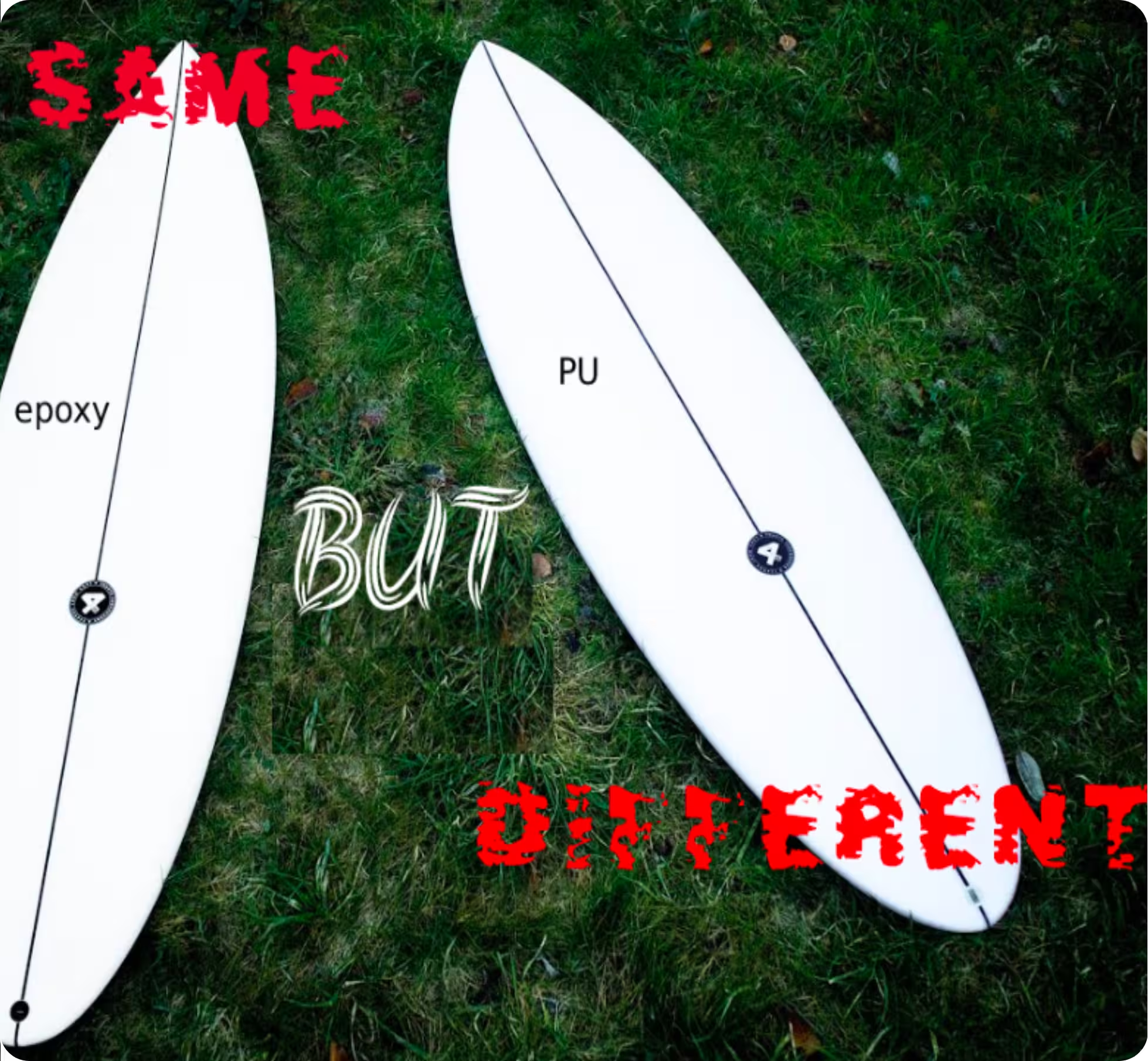
In Lombok's heat, on reef breaks with real consequence, construction is worth thinking about carefully. PU boards feel incredible — that flex, that familiarity — but they ding more easily and can delaminate in sustained tropical heat. For a one-board travel quiver that needs to last, epoxy is often the more practical choice. More durable, more buoyant, better suited to the lighter, punchier surf you'll find on smaller Lombok days. The trade-off is a stiffer feel that some surfers find less responsive in messy conditions — but for most visiting surfers, the durability argument wins.
If you're staying longer or living here, the PU vs epoxy decision becomes more nuanced. Come and talk to us — it's the kind of conversation that's worth having in person with someone who's ridden both in these specific breaks.
The brands we'd point you toward
For the one-board quiver at intermediate level, the Pyzel Ghost and the Lost Sabo Taj or CI Better Everyday are consistently the boards we see performing best across the widest range of Lombok conditions. Versatile, well-shaped, forgiving enough for an off day but with enough performance to reward good surfing when the waves are on. Sharp Eye's File Fifty is worth a look for surfers on the more experienced end who want something precise and technical.
For the mid-length one-board approach, Christenson and Channel Islands both shape mid-lengths that punch well above the category's reputation. These aren't compromise boards — they're genuinely exciting to surf and will cover more of Lombok's breaks than most people expect.
Fins are the last piece of the puzzle and the most overlooked. The right fin setup in any of these boards can transform how they feel — loosening up a board that feels stiff, adding drive to one that feels skatey, dialing in the pivot point for your style of surfing. It's a rabbit hole worth going down, and one we're happy to guide you through in store.
The bottom line: be honest about where you are, buy with slightly generous volume, choose construction for the climate, and talk to someone who surfs these breaks every day. That formula will get you to the right board almost every time.

The Right Board Is Out There — Come Find It
You came into this guide with a set of questions and hopefully you're leaving it with a clearer framework for answering them. How long have you been surfing? How consistently are you going forward? Which breaks are you heading to, and what are those waves actually doing? What does your honest assessment of your skill level tell you about the board you need versus the board you want?
That self-assessment is the work. Once you've done it, the board decision follows naturally.
Lombok is one of the best places in the world to be having this conversation. The variety of breaks within a short drive of Kuta means you can genuinely test a board across different conditions in a single day. The surf culture here is real, the knowledge runs deep, and at Flow Surf we're not just selling boards off a rack — we're in these breaks daily, we know what's working, and we care about putting the right board under the right surfer.
Whether you're buying your first board, stepping up from a mid-length, building out a quiver, or just trying to figure out why your current board doesn't feel right — come in and have the conversation. Bring your questions, your honest assessment, and if you have one, a clip of your surfing. We'll take it from there.
First board or step up — we'll sort you out.