Lombok has quietly become one of the best places in Indonesia to buy a surfboard. The waves are world-class, the surf culture is real, and if you know where to look, the boards on offer are as good as anywhere in Bali — without the crowds or a special markup. Same international quality with less hassel to choose and possibly the best board advice at Flow Surf Lombok.
But buying a board here, especially if you're visiting or relatively new to surfing, can feel overwhelming. There are a lot of options, a lot of opinions, and a lot of ways to end up with the wrong board for the wrong waves.
This guide cuts through all of it. We'll walk you through the key decisions — board shape, volume, construction, and brand — and connect everything back to the specific waves you'll actually be surfing here in Lombok. By the end, you'll know exactly what to look for, what questions to ask, and how to make a purchase you won't regret.

Know Your Waves First
Before you think about boards, think about water. Lombok's surf breaks vary significantly — from the mellow, forgiving rollers at Gerupuk's Insides, Don-donn's or Tanjung A'an, to the powerful, hollow reef breaks of Desert Point and the fast, punchy walls of Mawi. Each one rewards a different style of board.
For beginners and progressing surfers spending most of their time at places like Tanjung A'an or Ekas Insides, a longer, wider board with generous volume is your best friend. You want something that paddles easily, catches waves early, and gives you a stable platform to build technique. Think mid-length shapes — 7'0 to 8'6 — or a well-designed longboard in the 8'10"- 9'6" range.
Intermediate surfers eyeing more performance-oriented breaks like Gerupuk's Outside or the points along the south coast need something different. Here the priority shifts toward responsiveness and control in steeper, faster surf. A step-up shortboard, a fish, or a versatile hybrid shape in the 5'9 to 6'8 range is typically the sweet spot.
The key mistake most people make is buying a board calibrated for their best surfing on their best day. Buy for the waves you'll surf 80% of the time, not the waves you dream about. A board that works in average Lombok conditions will make you a better surfer faster than one that only shines on perfect days.
Wave count is the key here. If the board you choose has too much performance details to match the conditions and your skill level, you won't be catching enough waves to practice your surfing technique and are likely to develop bad habits. If you have the money and the space, having multiple board options to match the conditions will not only help you score more waves but will help you to gain a bigger variety of surf experience and will essetially accelerate your surf IQ. Trying new things will have it's learning curve and it's ok to have some sessions that are more about paddle tecnique, possition and duck diving but ultimately, you need to be getting the most time on wave possible to improve.
Board Types Explained
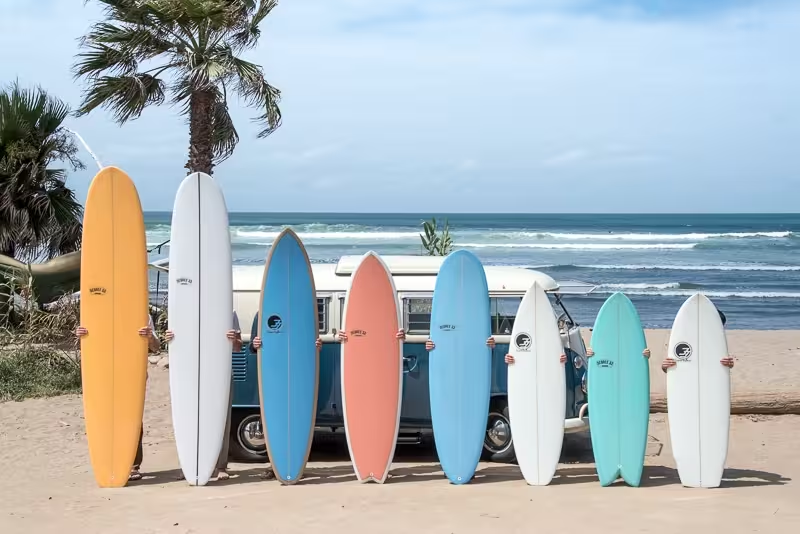
Understanding the basic categories makes the whole decision much simpler.
Shortboards (5'8 – 6'6) are high-performance shapes designed for speed, power, and manoeuvrability in steeper surf. They require solid technique to get the most from and are generally not the right choice for anyone still building their fundamental skills. You can learn on one, however, and just need to make sure the volume and design features matche your skill level. Lower rocker will make the paddling easier and help you to catch more waves. Also, as a rule of thumb, take your body weight in kilograms and devide by half to find your max duck diving volume. So for an 80kg person, this would be about 40L. Above that you will have trouble duck diving and may as well go for some more length in this case. As you improve you can gradually lower your volume. The closer you get to your ideal body weight to volume ratio, the better the perfomance you will get out of the board.
Fish and hybrid shapes (5'6 – 6'4) are the great middle ground. Wider, thicker, and with more volume than a traditional shortboard, they generate speed in smaller or weaker surf while still being fun and responsive. For a lot of visiting intermediate surfers, a fish or hybrid is the best all-around choice for Lombok. These boards tend to perform well up to overhead and a half surf before being a bit too flat for the conditions.
Mid-lengths and funboards (6'8 – 8'0) offer the best blend of paddling ease and manoeuvrability. They're forgiving enough for progressing surfers, fun enough for experienced ones on smaller days, and genuinely versatile across a wide range of Lombok conditions. When learning some people might see the extra length as limiting for practicing turns but a quick video review of Mikey February shredding on a 6'10 Channel Islands Mid puts that idea to rest. If you want mid to perform better, try aiming for lower volume and lower rail profiles. After that, practice is all you'll need.
Longboards (8'6 and up) are ideal for beginners and for anyone who loves a more relaxed, flowing style of surfing. They catch waves easily, feel stable underfoot, and are excellent tools for learning proper footwork and wave reading. The time on wave that they afford shouldn't be underatted. Being into a wave early and with a relaxed mind goes a long way in setting up your foundations for reading faster and more complexe waves.
Volume is the number that ties all of this together. As a rough guide, total beginners should aim for a board volume (in litres) equal to 3/4 their weight in kilograms. Progressing surfers can start to subtract from that number as their fitness and technique improve, all the way down to less than 0.4 of their weight in liters. These are pretty rough estimates and often a persons swimming fitness may be the main limitation. Consulting online volume calculators can be very useful. My personal favorite is here on the Pukas website.
Construction: PU vs Epoxy
This question comes up constantly, and it matters more in Lombok than in a lot of places because of the wind and the wave types on offer.
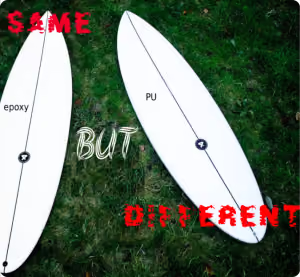
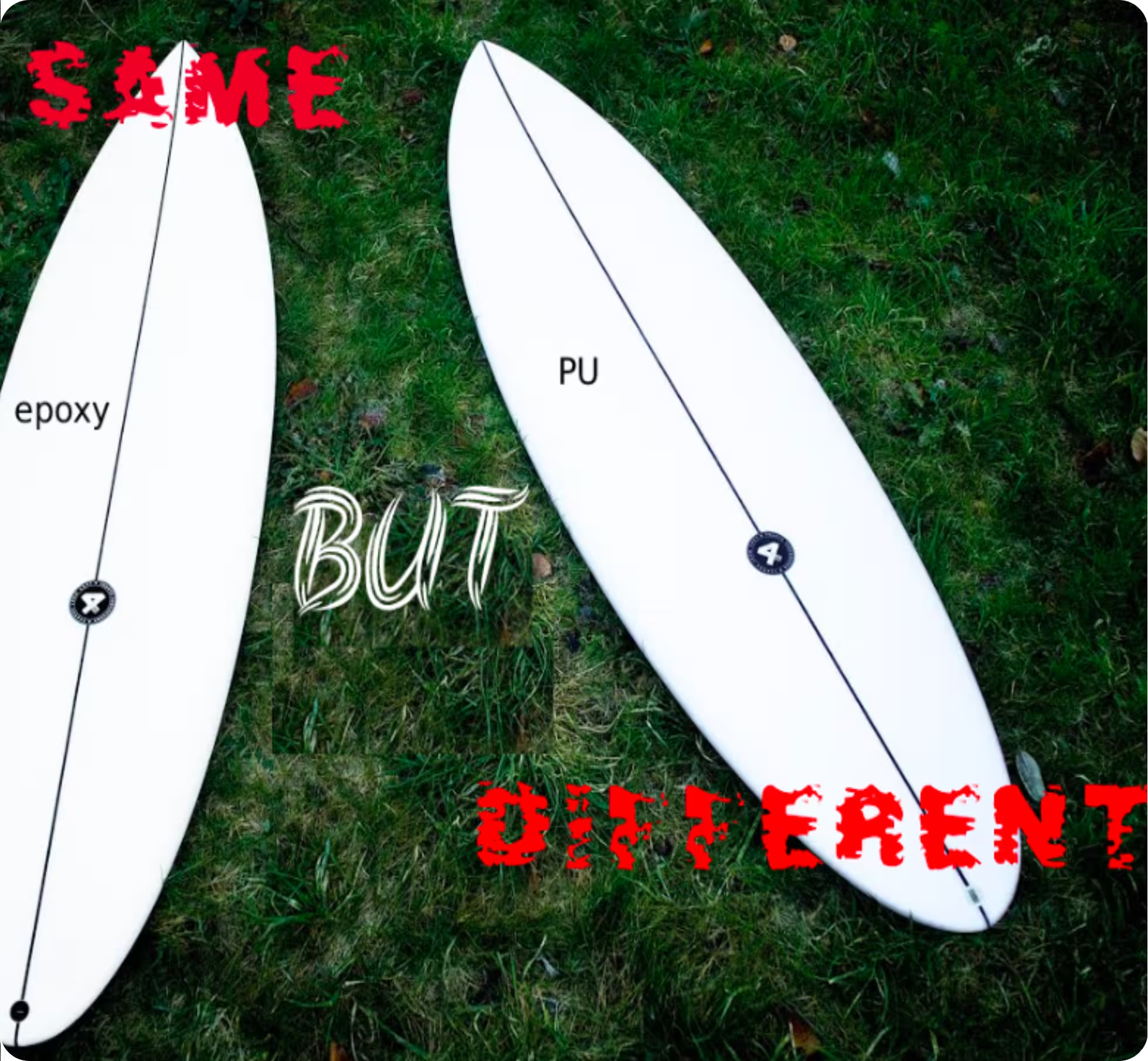
Traditional polyurethane (PU) boards with a polyester resin finish are what most shapers have used for decades. They have a familiar flex pattern that experienced surfers often prefer — a slight give underfoot that feels responsive and alive in the water. The trade-off is durability. In tropical heat, PU boards can delaminate faster, and they ding more easily. The slighter heavier weight of the PU boards mixed with their flexibility, is why surfers tend to prefer them in not so perfect conditions. They feel more stable and less rigid as the same time.
Epoxy boards, built on an EPS foam blank, are lighter, more buoyant, and significantly more durable. For a visiting surfer who wants something that handles the reef breaks and the heat without constant repair bills, epoxy is often the smarter choice. The extra buoyancy also helps in the slower, smaller surf common at beginner-friendly Lombok breaks. People often report that they fell them stiff and bouncy in windy conditions. While this is a common statement, they are many pro's who exclusively ride epoxy, so they can't be all bad.
Neither is universally better — it comes down to your surfing style, your target breaks, and how long you plan to have the board. When you come into Flow Surf, it's one of the first things we'll talk through with you.
(For a deeper breakdown, read our full guide: PU vs Epoxy in Indonesia — How to Choose.)

Brands We Carry and Why
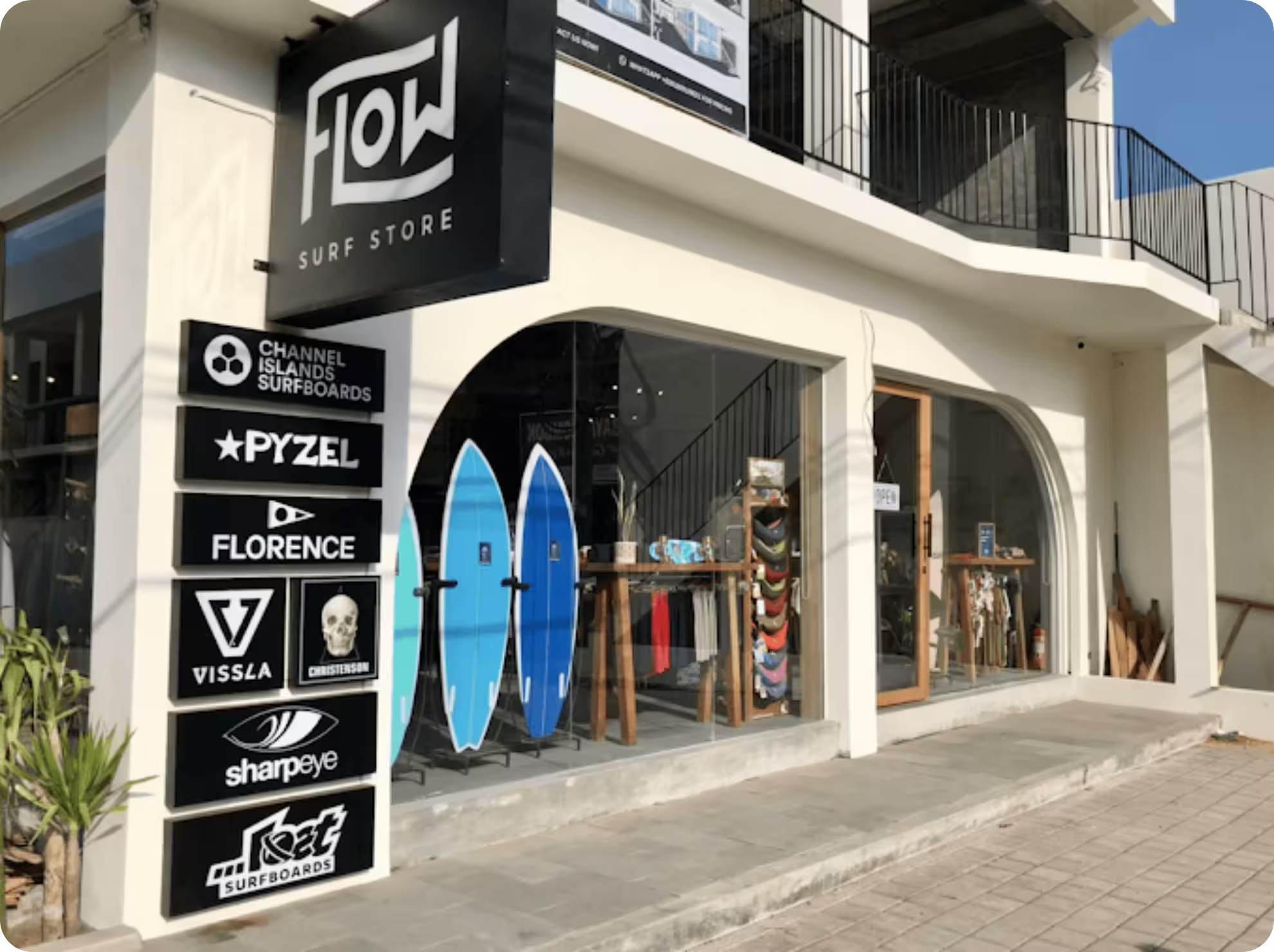
We're deliberate about the brands we stock at Flow Surf. Everything on our walls has been chosen because it performs well in Lombok conditions and is backed by shapers who actually understand what Indo surf demands.
Pyzel shapes have earned a strong reputation for versatility — performance-oriented without being unforgiving. Their Ghost and Phantom models are consistently popular with intermediate surfers looking to step up.
Lost Surfboards brings creative, progressive design that punches above its weight in smaller, punchier surf — exactly what you get on a lot of Lombok's reef breaks on a typical day.
Sharp Eye builds exceptionally clean, precise boards that reward committed surfing. If you're a competent surfer who wants something technical, Sharp Eye is worth a serious look.
Christenson is our choice for surfers who want something with a bit more soul — mid-lengths, alternative shapes, boards built to be enjoyed rather than just pushed. Super high performance hiding in somewhat retro shell.
Channel Islands last but certainly not least. Once of the world's most notible surfbrands, maybe they the most notible! Top qualtity and decades of performance refinements under the feet of the world's best surfers. You can't go wrong with Channel Islands board!
We also stock a curated range of accessories, leashes, fins, and wax suited to tropical conditions. Fins in particular are underrated as a performance variable — the right fin setup in a board you already own can feel like a completely new board. Stay tuned for our blog on fins or come and have a chat about them in store. With so much to consider like foil, template, stiffness and set up, the world of fins can quickly become overwhelming. We can help you zoom in on the right set up.
(Explore our blog 'brands we ride with' for a full view of the brands we carry
How to Buy Right: Final Advice
A few honest principles before you make the call.
Don't buy too little board. This is the single most common mistake. A board that's slightly too big, too wide, or too voluminous will help you catch more waves and help you to improve faster than something you have to fight. You can always size down later. There will be a point where a liter in either direction will matter, but if your still working on your foundations, be a little generous and you'll catch way more waves.
Buy for here, not for home. Lombok surf is generally powerful and hollow compared to many beginner or intermediate spots elsewhere. A board that works in gentle beach break at home may feel completely wrong on a reef. Ask us what's actually moving well in the current conditions. Also if you are used to wearing a wetsuit, they sometimes can weight up to 8kg wet and theis will change your selection criteria.
Think second-hand if budget is tight. We occasionally have quality used boards in store, and there's an active second-hand market in Kuta. A well-maintained second-hand board from a reputable brand will outperform a cheap new board almost every time. We also carry our own Flow brands baords and this could be a good option. Slightly better price and same international qualtiy as the bigger brands.
Talk to someone who surfs here daily. Surf shop staff at Flow aren't just selling boards — we're in the water at these breaks regularly. Use that. Ask what we're personally riding, what our best customers keep coming back for, and what we'd steer our friends toward.
Buying the right surfboard in Lombok is one of the best investments you can make in your time here. Come into Flow Surf in Kuta, and let's find the right one for you.


.avif)