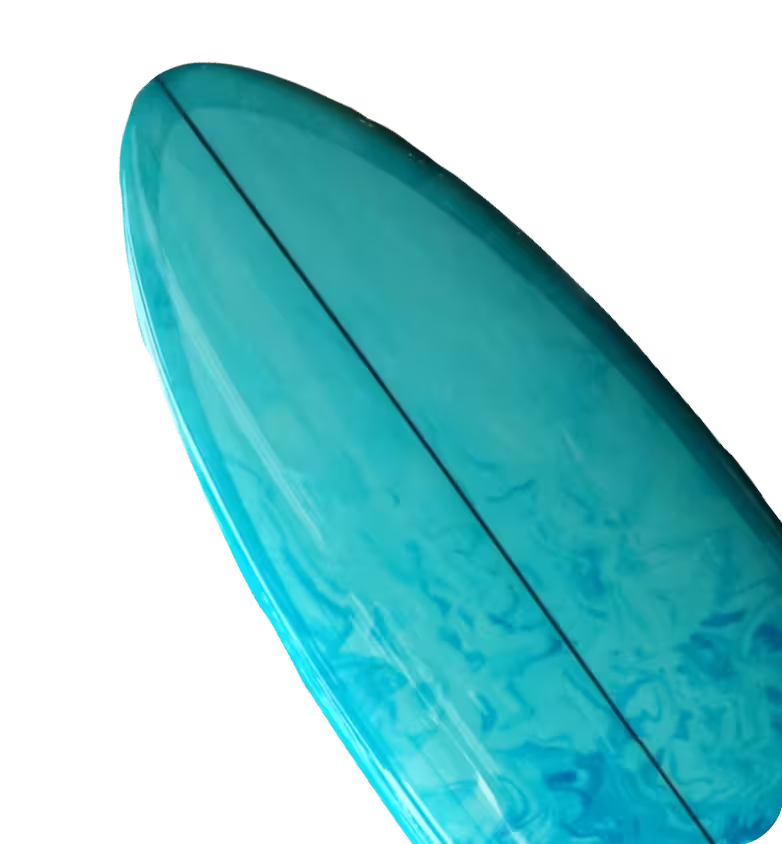
How to Travel Lombok with a Surfboard
Lombok's roads are empty, the beaches are endless, and the waves are worth every kilometre. But getting yourself and your board from A to B — whether that's from the airport, across the island to a new break, or onto a plane to your next destination — takes a little planning if you want to arrive with your equipment intact.
The good news is that travelling with a surfboard in Lombok is genuinely manageable once you know what to expect. The bike roads to the breaks, the racks, the airlines, the board bags — none of it is complicated, but each piece has its quirks. This guide covers everything: daily travel around Kuta and the south coast, getting your board on a plane, inter-island and international travel, how to protect your board on a bike rack, and a few honest notes on keeping your equipment safe. Consider it the logistics side of your surf trip — sorted.
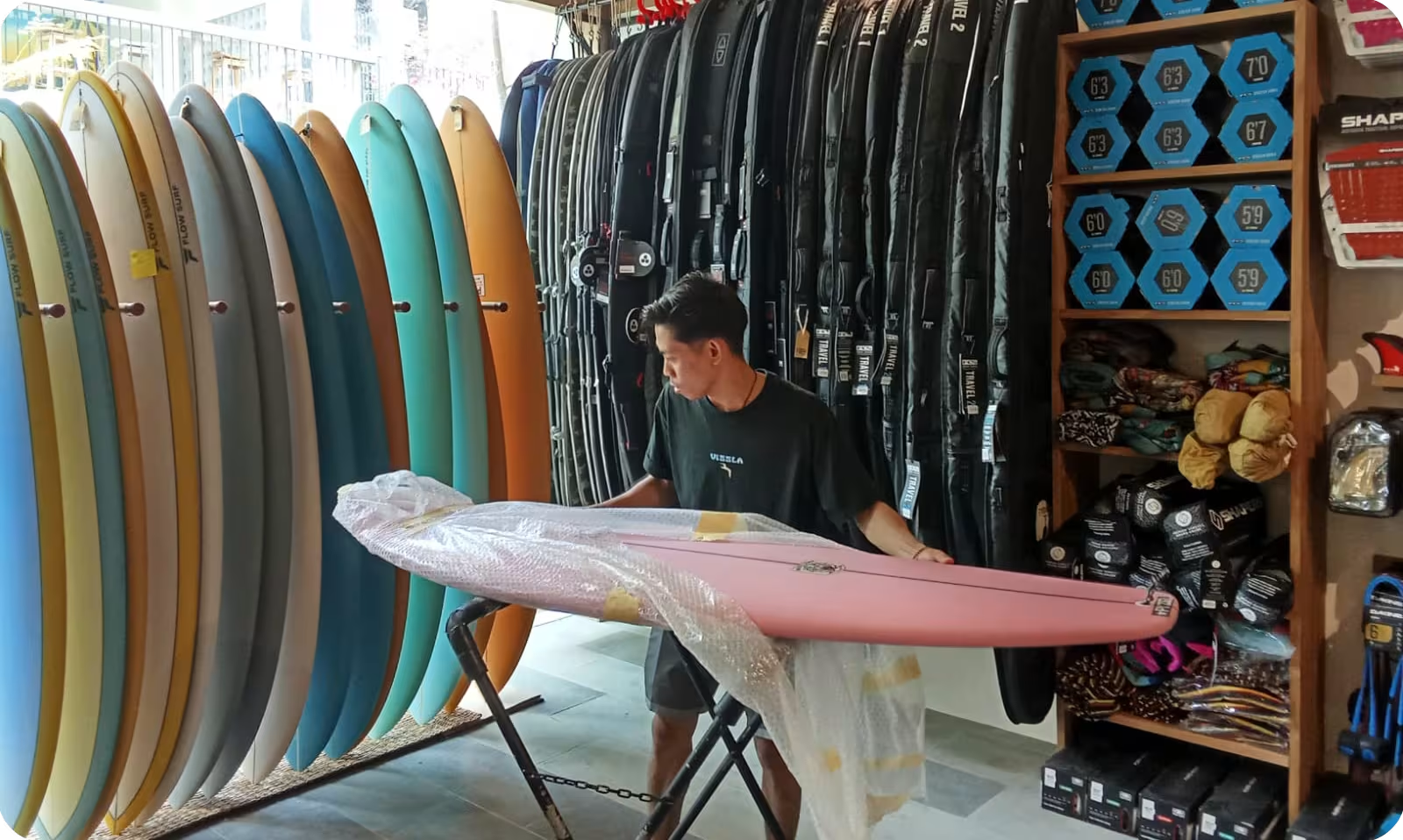
Daily Travel — Getting Your Board to the Break
For most surfers in Lombok, daily travel means one thing: a scooter, a board rack, and a road that leads to the ocean. It's one of the great simple pleasures of surfing here — the ride to the break is part of the experience. But a little preparation goes a long way in making sure your board arrives in the same condition it left in.
The first decision is how you're protecting your board for the ride. There are two main options and both have their place.
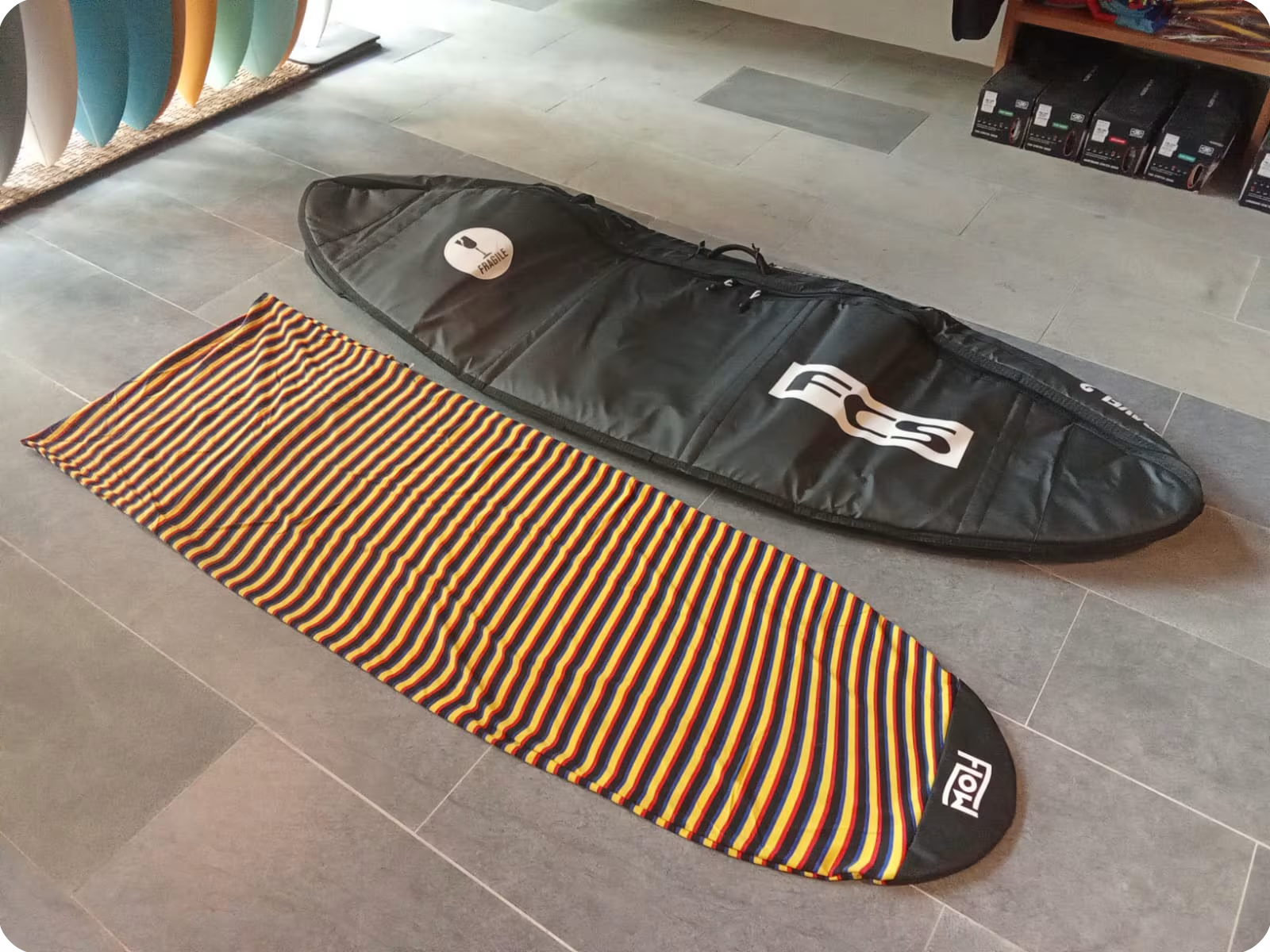
A board sock is the lightweight choice — a thin fabric sleeve that slips over your board and protects it from surface scratches, sun exposure and the inevitable brush against something on the way out the door. Socks are easy to travel with, quick to put on and take off, and fine for short rides on smooth roads. They won't protect against a hard knock but for the daily commute to a break you know well, they do the job.
A day bag is the step up — a padded single or double board bag designed for regular use rather than air travel. Thicker walls, carry handles, and enough protection to absorb the bumps and vibrations of Lombok's roads, including the rougher tracks that lead to some of the better breaks. If you're riding to Mawi or taking a longer road trip across the south coast, a day bag is the smarter call.
Both are available at Flow Surf in Kuta — worth picking one up before your first session rather than after your first ding.
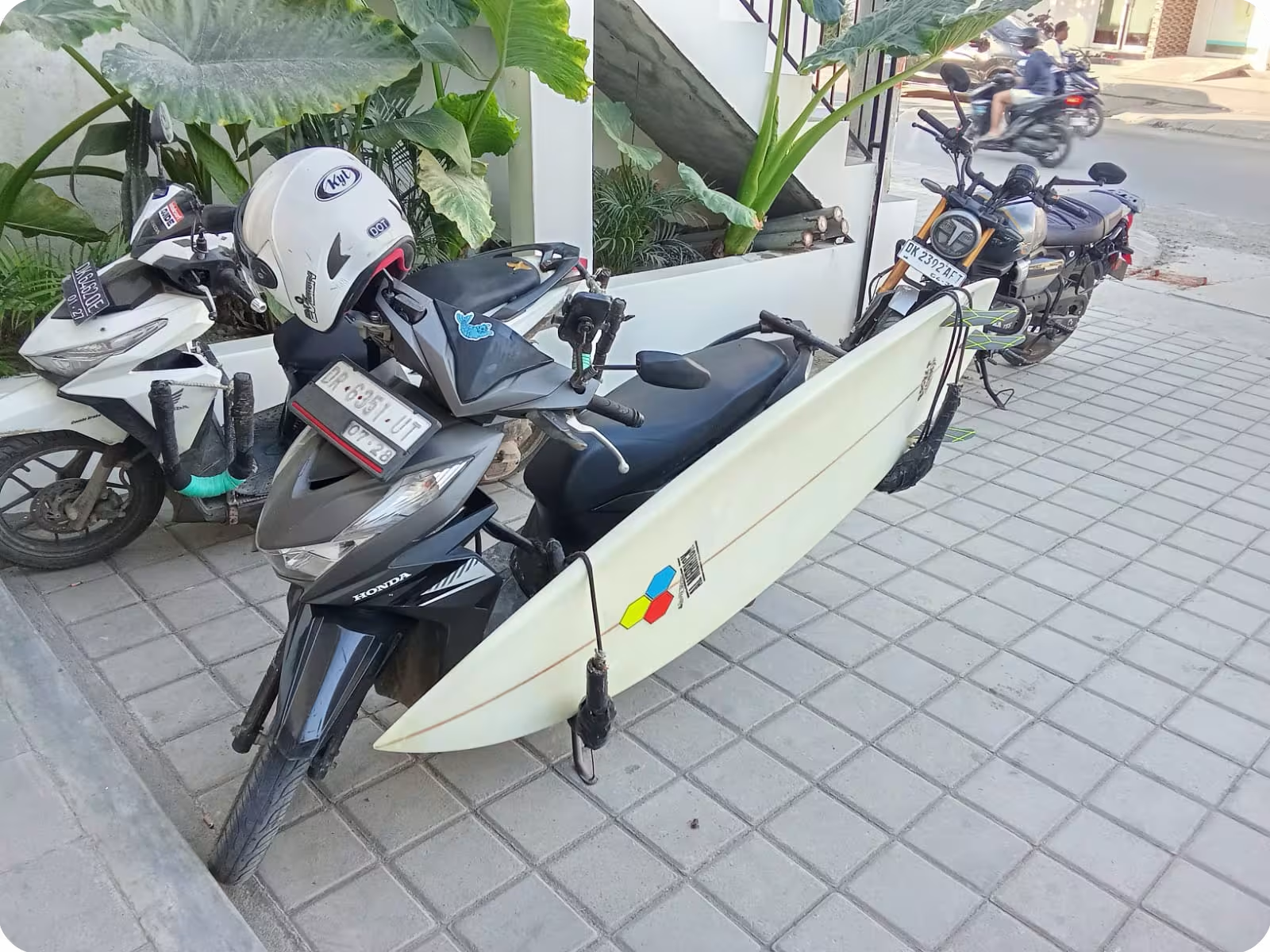
Scooter rentals in Lombok typically run around 70,000 IDR per day or 1,500,000 IDR per month and most come with a board rack already fitted. This is convenient but comes with a catch — the padding on rental racks varies enormously. Some are well maintained, others have padding worn down to almost nothing, leaving your board resting against bare metal or hard plastic on every bump. Before you ride off, run your hand along the rack and check the padding honestly. If it feels thin or hard, wrap a spare towel, a piece of foam, or a folded rash vest along the contact points before you strap your board down. It takes two minutes and can save you a pressure ding or worse on a longer ride.
Strap tension matters too. Too loose and the board shifts around on the rack, too tight and you risk pressure on the rails, particularly on a lighter epoxy board. Snug but not cranked is the rule. If your rack uses bungee cords rather than proper straps, take it slow on rough sections — bungees stretch under vibration and a board that felt secure at the start of the ride can work its way loose by the time you hit the dirt track.
The roads around Kuta and the south coast are generally good but can get rough on the approaches to some breaks. Slow down on those last few hundred metres — your board will thank you.
Air Travel — Getting Your Board on a Plane
Flying into or out of Lombok with a surfboard used to mean one airline, one price, and not much choice. That's changed significantly and the options are now genuinely worth knowing before you book.
The airlines serving Lombok
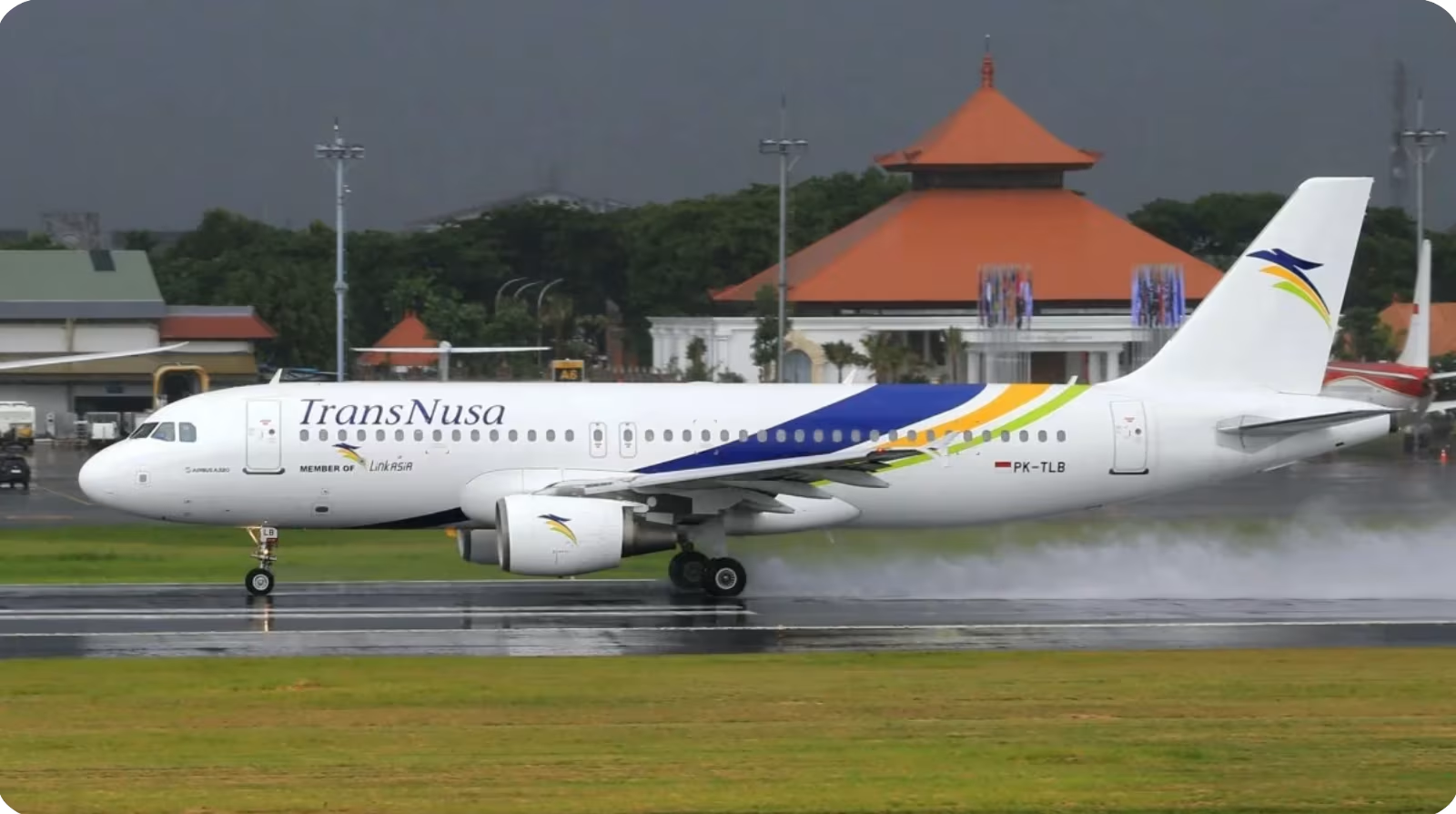
TransNusa launched direct Bali–Lombok flights in December 2025 on a full Airbus A320, operating multiple daily services and quickly becoming the preferred carrier for surfers on this route. The larger jet aircraft means more cargo hold space and a smoother, more reliable experience than the small propeller planes that previously dominated the route. TransNusa's surfboard fee is currently IDR 200,000 per board bag per domestic flight — straightforward, reasonable, and confirmed as recently as early 2026. For most surfers travelling Bali–Lombok or Lombok–Bali, TransNusa is the call.
Lion Air and its group airlines — Batik Air, Super Air Jet and Wings Air — also operate into Lombok. Lion Air, Batik Air and Super Air Jet charge IDR 1,000,000 per board, making them a significantly more expensive option for travelling surfers. Wings Air operates propeller aircraft on some routes and applies the same fee, with an additional board length restriction of 200cm — worth knowing if you're travelling with a longboard.
Garuda Indonesia is the standout option if your routing works — they include surfboards as free sports equipment within a 23kg allowance on top of your standard baggage, and their routes include Jakarta–Lombok. Tickets are generally more expensive than the budget carriers but if you're travelling with multiple boards the maths can work strongly in your favour.
A note on the Lion Air group: Lion Air, Batik Air and Super Air Jet share the same policy, but if your route includes a Wings Air leg, that leg carries the IDR 1,000,000 fee separately. Always check which aircraft is operating each leg of your journey before you book — what looks like a single Lion Air booking can involve multiple carriers with different fee structures.
Packing your board
How you pack matters as much as which airline you choose. A few principles worth following:
A travel board bag — proper hard-shell or heavily padded — is non-negotiable for air travel. The thin day bag that works fine for scooter rides will not protect your board in a cargo hold. Invest in a quality travel bag or borrow one. Bubble wrap the nose and tail, pad the fins carefully, and if you're travelling with multiple boards stack them so the fins and leash plugs of one board aren't pressing into the deck of another.
Single or slim double board bags handle much better for airlines than large coffin bags. A big heavy coffin bag stuffed with clothes as well as boards is more likely to be flagged, harder to handle in a busy check-in queue, and more likely to cause problems with oversized baggage rules. Pack your clothes separately in a regular bag and keep the board bag for boards only.
Remove or loosen your fins before packing. Fins are the most commonly damaged part of a board in transit — even a small amount of pressure in the wrong direction on a fin box can crack the board from the inside out. Fin covers or small foam padding around each fin adds meaningful protection for minimal weight.
Check in early. Some airlines limit the total number of surfboards per flight — if you arrive late and the allocation is full, your board may be held and put on the next flight while you fly ahead without it. First to check in, first to get the board on the plane.
Fees summary
AirlineSurfboard fee Notes:
Trans Nusa IDR 200,000 / board Preferred option, A320 into Lombok
Lion Air / Batik Air / Super Air Jet IDR 1,000,000 / board
Check for Wings Air legsWings Air IDR 1,000,000 / board
200cm max length
Garuda Indonesia - Free (sports equipment) More expensive tickets, major routes only
Always confirm fees directly with the airline before you fly — policies change and what's accurate today may shift by the time you travel.
Inter-Island and International Travel — Beyond the Plane
Not every journey to or from Lombok has to involve an airport. For surfers coming from Bali especially, the sea crossing is a legitimate option — and in some situations, the better one. Here's how it breaks down.
Bali to Lombok by fast boat
The fast boat crossing between Bali and Lombok takes roughly two to three hours depending on conditions and departure point, and for surfers it has one significant advantage over flying: you can bring your surfboards onboard for an extra charge, making it a convenient way to travel with multiple boards without the airline fee calculation.
The two longest-running and most reliable fast boat operators on this route are Eka Jaya, Gili Getaways and Blue Water Express, with departures from ports including Serangan, Sanur, Padang Bai and Benoa Harbour in Bali. Prices and board fees vary by operator so confirm directly when booking, but as a general rule the total cost per person including a board is competitive with flying once you factor in Lion Air's board fees.
A few practical notes: fast boats can be uncomfortable in choppy conditions — the Lombok Strait can get rough, particularly outside of the dry season. Your board bag will be stacked on the roof or in an external luggage area, exposed to sea spray and the elements. Make sure your bag is properly sealed and if your boards are valuable, consider a dry bag or additional cover for the crossing. Arrive early — board loading takes time and departure schedules are taken seriously.
Bali to Lombok by public ferry
The public ferry crossing takes close to five hours and runs from Padang Bai in Bali to Lembar in Lombok. It's slower, less comfortable, and a significantly longer journey once you factor in the drive from Lembar to Kuta on the south coast. The upside: surfboards travel on the ferry with no extra fees — just keep them with you and out of the way of foot traffic. For surfers travelling on a tight budget with multiple boards, or for anyone who wants an authentic slice of Indonesian travel, the ferry is worth considering. Just factor in the full journey time — door to door from Kuta Bali to Kuta Lombok via ferry is a full day's travel.
International travel
Most international surfers arrive into Lombok via Bali, connecting onward by plane, fast boat or ferry. Direct international flights into Lombok International Airport (LOP) do exist but options remain limited — checking routings through Kuala Lumpur, Singapore or Jakarta will often open up more competitive fares and better board fee situations depending on your carrier.
If you're flying internationally, the airline you choose for your long-haul leg sets the tone for the whole trip. Check the surfboard policy of your international carrier carefully — fees, bag dimensions, and whether boards are classified as sports equipment or oversized baggage varies significantly between airlines and can add hundreds of dollars to a trip if you're not prepared. Generally, booking direct with the airline rather than through a third-party platform gives you cleaner visibility over what you're actually paying for baggage.
One practical tip for international travellers: if your routing takes you through Bali and you're connecting to Lombok, build in enough time at Ngurah Rai airport to recheck your boards for the domestic leg. International to domestic connections in Bali can be tight, and a missed domestic flight with a surfboard in the hold adds a layer of complication you don't want at the start of a surf trip.
Bike Racks, Padding and Protecting Your Board on the Road
The bike rack is one of those things that gets almost no attention until something goes wrong. A ding from a poorly padded rack on the way to the break is one of the most avoidable ways to damage a board — and one of the most common. A little attention here goes a long way.
What comes with a rental scooter
Most scooter rentals in Lombok come with a rack already fitted, which is convenient but not always adequate. Rental racks see a lot of use — padding compresses over time, straps fray, and the foam that was perfectly serviceable six months ago may now be little more than a thin skin over hard plastic or bare metal. The rack looks fine at a glance. It's only when you run your hand firmly along the contact points that you feel what's actually there.
Before you ride anywhere, do this check every time you rent a new scooter. Press down on the padding with your thumb — if it compresses immediately to almost nothing, it needs reinforcing before your board goes on it. This is especially important for epoxy boards, which are stiffer and transmit vibration and pressure more directly than PU. A hard bump on a worn rack can leave a pressure ding or crack a glass job on a board that cost you a significant amount of money.
Reinforcing a worn rack
The fix is simple and costs almost nothing. A folded towel laid along the rack contact points adds meaningful cushioning for short to medium rides. A strip of pipe foam, available cheaply at any hardware store in Kuta, cut to length and cable-tied along the rack arms is a more permanent solution that will last the duration of a longer stay. Some surfers carry a small off-cut of closed-cell foam in their board bag specifically for this purpose — it takes up almost no space and solves the problem instantly wherever you are.
If you're renting a scooter for a month and doing daily sessions, it's worth asking the rental shop directly about the rack condition and whether they can replace the padding. Most shops are accommodating — it's a small ask and protects both your board and their equipment from damage claims.
Strapping your board down correctly
How you strap the board matters as much as the rack padding underneath it. Too loose and the board moves on the rack with every bump and corner, wearing against the contact points and risking a slide at speed. Too tight and you're putting sustained pressure on the rails — particularly problematic on a lighter board or anywhere near a fin box.
The goal is snug and stable — enough tension that the board doesn't shift, not so much that you're compressing the foam. Check the straps again after your first kilometre, especially if it's a new rack you haven't used before. Bungee cords in particular can give a false sense of security — they feel tight when you hook them but stretch progressively under the vibration of the road. On longer rides, stop and re-check.
Board position on the rack also matters. Fins should face up and away from the rack surface — never rest a board fin-down on a rack unless you want to explain a broken fin box to a shaper. Nose forward is the standard orientation for most racks, but the key is that the board is balanced and stable before you move.
On rougher roads
Some of the best breaks on Lombok's south coast involve a stretch of rough track at the end — loose gravel, potholes, and uneven surfaces that amplify every vibration through the rack. Slow right down for these sections. What feels fine at road speed becomes a rattling, bouncing risk on rough ground. Five minutes of riding slowly is a significantly better outcome than arriving at the break with a fresh crack in your deck.
If you're heading somewhere particularly remote and the road is genuinely rough, consider carrying your board under your arm for the last section rather than riding it in on the rack. It's not always practical, but for a board you care about it's worth the extra effort.
Safety and Theft — Looking After Your Board in Lombok
The honest truth first: a stolen surfboard in Lombok is not common. The surf community here is tight-knit, locals know the faces in the lineup, and a foreign board moving through back channels tends to get noticed. You're not in a high-theft environment and there's no need to be paranoid. That said, a quality surfboard is a valuable object — worth anywhere from several hundred to well over a thousand dollars — and basic common sense applied consistently will mean you almost certainly never have a problem.
At the break
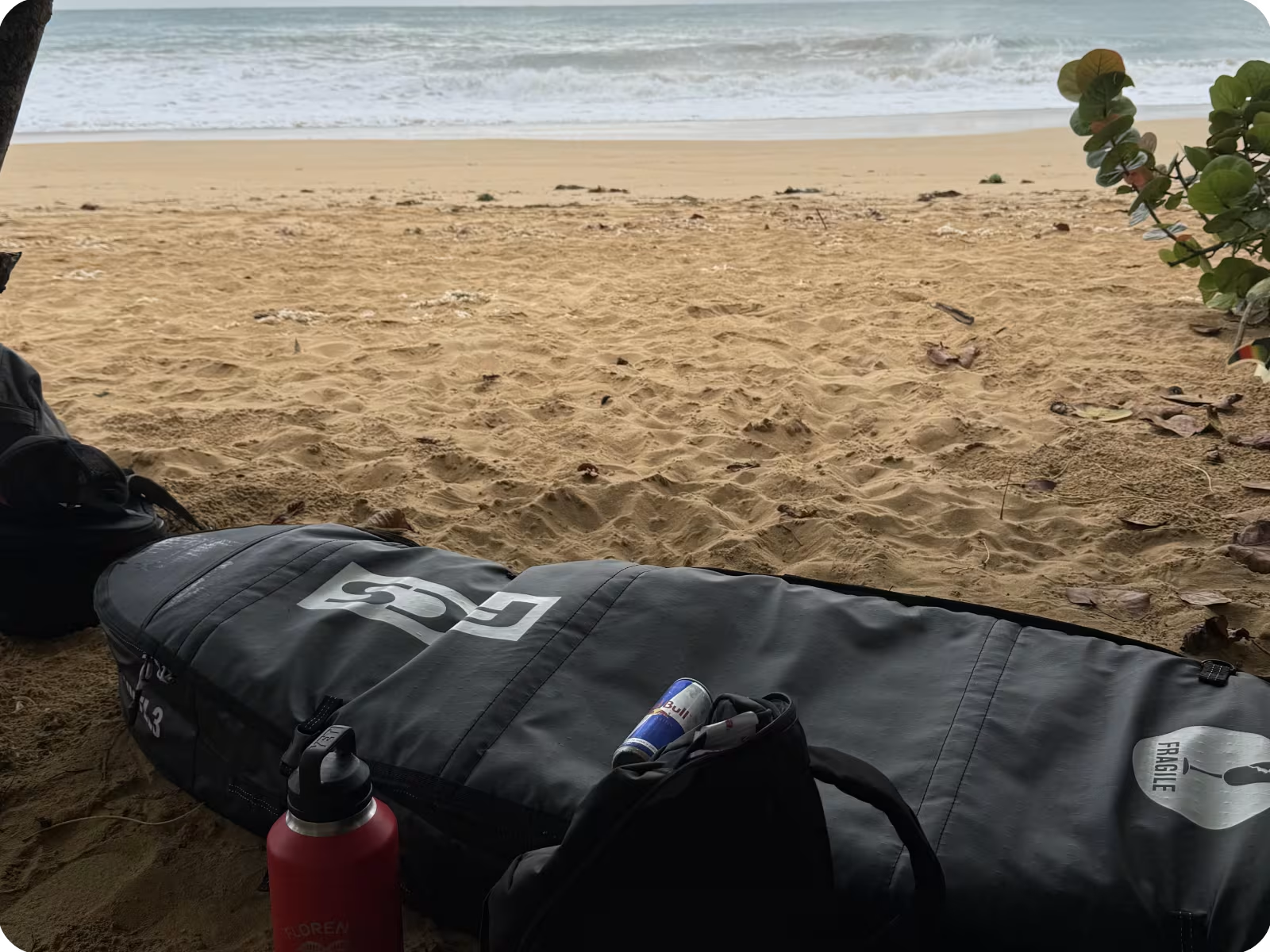
The most vulnerable moment for your board is when you leave it on the beach or in the car park while you're in the water. For well-known breaks with regular visitors and local businesses nearby — Gerupuk, Selong Belanak, Tanjung A'an — this is generally low risk. People are around, eyes are on the beach, and the social fabric of the place provides its own informal security.
Where it gets riskier is at quieter, more isolated breaks that you don't know well, particularly if there are no locals or businesses nearby and you're leaving gear unattended out of sight. Don't leave your board propped against your scooter at an empty car park while you paddle out for two hours at a break you've never surfed before. It's not that something will definitely happen — it's that the one situation where it does is entirely avoidable with a small adjustment.
The simplest habit: park where you can see your gear from the water, or where other people can. If you're with a group, stagger your sessions so someone is always on the beach. If you're solo at a quiet break, introduce yourself to anyone nearby — a local fisherman, a warung owner, someone who knows the spot. A brief human connection is the most effective security measure there is.
On the scooter
A board on a rack is visible and exposed. Don't leave your scooter parked unattended with a board on it in an unfamiliar area for longer than necessary — pop into a shop, grab a coffee, but don't leave it sitting on a busy street for an extended period while you're elsewhere. Most of the time nothing will happen. Occasionally something will. The habit costs you nothing.
Board bags with zips can be padlocked — a small combination lock through the zipper pulls is a low-effort deterrent that makes an opportunistic grab significantly less attractive. It won't stop a determined thief but it raises the bar enough to matter in most situations.
At your accommodation
Most accommodation in Kuta and the surrounding area is well set up for surfers and has secure board storage, either in your room, a dedicated rack, or a lockable storage area. Ask about it when you check in rather than assuming. Leaving boards leaning against an outside wall overnight in an unlocked area is the one habit worth breaking — not because theft is likely but because it's the easiest thing to change.
If something does go wrong
Report it. The local community takes this seriously and a stolen board has a way of surfacing relatively quickly in a place where everyone knows everyone. Your accommodation, the local surf shops and the community around the breaks are your best resources — word travels fast in Kuta and a description of a distinctive board gets shared quickly.
Photograph your boards before your trip — deck, bottom, any distinctive dings, repairs or markings. It's the kind of thing that feels unnecessary until it isn't, and takes thirty seconds.
Vast empty roads, uncrowded breaks and the kind of surf culture that still feels genuinely local — Lombok rewards the surfers who show up prepared. Look after your equipment, apply a little common sense, and the rest takes care of itself.